
Campbell County Arrest Records
Campbell County arrest records can begin with a police officer, sheriff's deputy, citation, warrant, or jail booking. The booking side may involve the Campbell County Detention Center, which houses county, state, and federal inmates and provides current custody information through JailTracker and by phone. Arrest information reflects charged offenses against people in custody, and CCDC warns that public information should be verified by contacting the detention center.
Court charge records begin when the allegation enters the court system. Police may initiate the matter through citation, arrest, or complaint. The County Attorney prosecutes many District Court matters, including criminal, traffic, and juvenile cases. The Commonwealth's Attorney primarily prosecutes felonies in Circuit Court after indictment or information. For the full court file, disposition, and sentencing, use Campbell County criminal court records rather than a booking-only source.
Find Campbell County Arrest Records
Start with the type of record needed. Current custody and booking questions go to the Campbell County Detention Center or official JailTracker. Police reports go to the agency that created the report, such as Campbell County Police or a city police department. Warrant service questions may involve the sheriff. Charges filed in court are searched through KYeCourts/CourtNet, ePay for payable matters, or the Circuit Court Clerk at the courthouse.
- Check whether the person is currently in custody through the official jail path or by calling CCDC.
- Use KYeCourts, CourtNet, or ePay to search the related case, citation, or party name.
- Read the charge list, court level, hearing dates, and any bond or failure-to-appear entries.
- Contact the Circuit Court Clerk when a certified copy, older court file, or sealed-status answer is needed.
- Send police-report requests to the law-enforcement agency that created the report, not to the court clerk.
For custody-only details, the jail roster and booking process are closer to the Campbell County inmate records path. For the full criminal case file after charges are filed, use Campbell County criminal court records.
Charges After Arrest Documents
The court charge record is shaped by the document that brings the allegation into court. In Campbell County, District Court may see citations, complaints, misdemeanor matters, traffic offenses, felony arraignments, and felony probable-cause hearings. Circuit Court sees felony indictments, felony pleas, trial records, sentencing orders, and post-judgment motions. One arrest can lead to more than one charge, and each charge can move at a different pace.
| Document | Who Uses It | What It Starts | Campbell County Context |
|---|---|---|---|
| Complaint | Officer or prosecutor | A sworn allegation or charging path. | Used in District Court matters and some felony first-stage proceedings. |
| Information | Prosecutor | A formal charge filed without a grand-jury indictment where allowed. | Commonwealth's Attorney may use felony charging authority in Circuit Court contexts. |
| Indictment | Grand jury | A felony prosecution in Circuit Court. | Moves a felony beyond preliminary District Court events into Circuit Court. |
Campbell County Charge Status
Charge status is the reason an arrest record should never be read as the final answer. A case may be pending at arraignment, amended after prosecutor review, reduced during plea discussions, dismissed for legal or proof reasons, or resolved by conviction. A charge can also be held to a grand jury from District Court and later appear in Circuit Court under a new case posture.
| Status | What It Means | Record Reading Tip |
|---|---|---|
| Pending | The charge has not reached final disposition. | Check the next court date and later docket entries. |
| Amended | The charge wording, level, or statute was changed. | Read both the original charge and the current charge. |
| Reduced | The prosecutor or court process lowered the charge level or offense. | Do not report the original level as the outcome. |
| Dismissed | The charge ended without conviction for that count. | Check whether dismissal was with or without prejudice if shown. |
| Acquitted | The defendant was found not guilty. | Look for expungement eligibility rules if applicable. |
| Convicted | The charge ended in a conviction by plea or verdict. | Read sentencing, fines, costs, restitution, and probation terms. |
Charges Versus Convictions
A court charge is an allegation. A conviction is an outcome. Campbell County arrest records may list the reason for custody, but that reason can change once prosecutors review facts, file charges, amend counts, or decide not to proceed. Court records are the better source for current charge status and final disposition.
| Point | Charge | Conviction |
|---|---|---|
| Meaning | An accusation filed or pursued after arrest, citation, complaint, information, or indictment. | A final court result after guilty plea, verdict, or qualifying finding. |
| Timing | Early in the case and subject to change. | After disposition and judgment. |
| Record source | Police, jail, ePay, CourtNet, docket, or clerk file may show it. | Court disposition and sentencing entries verify it. |
| Public meaning | Does not prove guilt. | May carry sentence, probation, fine, cost, restitution, and collateral effects. |
Campbell County Police Arrest Records
Campbell County has several public-safety custodians. The sheriff serves warrants and civil or criminal process, provides court security, and handles tax duties. Campbell County Police handles its own police records. City police departments, such as Newport Police, may hold reports they created. The county's Fiscal Court open-records policy warns that it does not maintain records for cities, special-purpose entities, the Commonwealth, or other organizations.
The assigned manifest image for this page comes from the Campbell County Police public-records access page, which gives a practical path for police-created records.
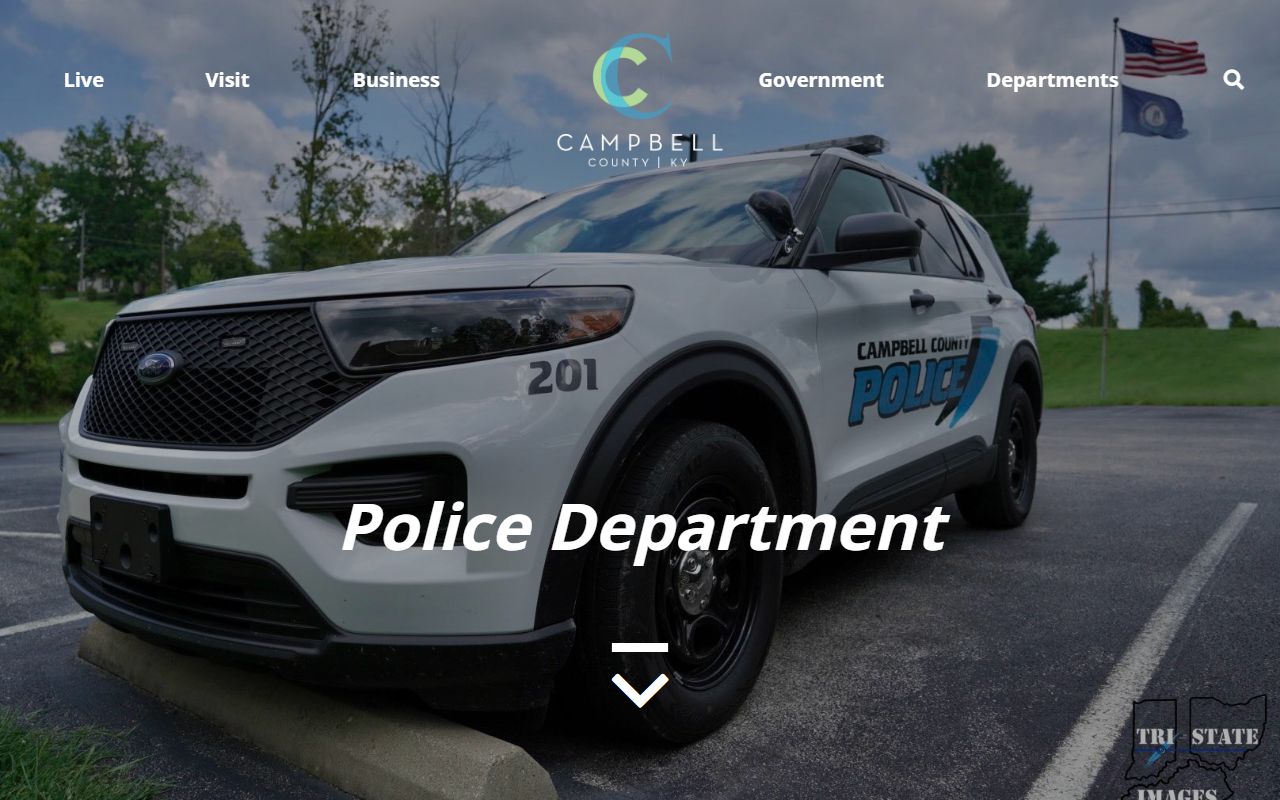
Police reports can support an arrest-record request, but the formal court charge and case outcome still come from the court record.
Campbell County Police Records
ATTN: Records
P.O. Box 6
Alexandria, KY 41001
Fax: 859-547-3129
Who Files Campbell County Charges
In Kentucky, the prosecutor titles are County Attorney and Commonwealth's Attorney. County Attorney Steve Franzen is named in Campbell County materials. The County Attorney handles many District Court prosecutions, including criminal, traffic, and juvenile matters. The Commonwealth's Attorney primarily prosecutes felonies in Circuit Court. This matters because the arresting officer, jail, prosecutor, court, and clerk each hold different parts of the record.
The County Attorney's felony role is usually limited to drafting criminal complaints, search warrants, and arrest warrants in certain cases. A felony that moves forward after indictment is primarily a Commonwealth's Attorney case in Circuit Court. Defendants who cannot afford counsel may ask the court about public-defender eligibility. The Campbell County Public Defender phone listed by the detention center is 859-292-6596, but that office is not a public records custodian for general case searches.
Sealed And Expunged Charges
Restricted charges and arrest records may be unavailable to the general public. Juvenile court records are confidential under KRS 610.340 unless a statute or court order permits disclosure. KRS 61.878 also protects certain law-enforcement, prosecutor, privacy, and confidential records. Expungement can remove eligible charges, dismissals, acquittals, misdemeanor convictions, traffic infractions, or certain felony convictions from public official background checks when statutory rules are met.
| Point | Sealed | Expunged |
|---|---|---|
| Public access | Hidden from public view by law or order. | Removed or deleted from official public access as allowed. |
| Common charge context | Juvenile, confidential, protected-party, or sensitive records. | Acquittal, dismissal, no indictment, misdemeanor, violation, traffic infraction, or eligible felony conviction. |
| Key statutes | KRS 610.340 and court orders. | KRS 431.073, KRS 431.076, and KRS 431.078. |
| Where to start | Ask the Circuit Court Clerk about lawful access. | Use KCOJ expungement forms and file in the court where the case was handled. |
Statewide Charge Record Checks
Statewide systems can help, but they do not replace the Campbell County court file. KYeCourts/CourtNet and ePay show court and payment data where available. Kentucky Online Offender Lookup is for state inmate or offender information, not county court charges. The Kentucky State Police sex offender registry is a registry search, not a complete criminal-history or charge database. Federal matters are separate and may involve the U.S. District Court for the Eastern District of Kentucky, PACER, or the Bureau of Prisons after transfer.
For a local arrest-to-charge question, stay with the local chain first: police or sheriff record, CCDC booking or custody confirmation, District Court or Circuit Court case record, then prosecutor and clerk context. If a court charge is tied to a missed date, the warrant path should be checked because District Court and Circuit Court can issue bench warrants for failure to appear.
Note: A missing online charge can mean wrong search inputs, wrong custodian, sealing, expungement, or an unfiled police matter.
Restricted Campbell County Charge Records
Campbell County charge records may be restricted when they involve juvenile matters, sealed cases, expunged charges, active investigations, prosecutor work product, victims, witnesses, mental-health information, medical information, protected identifiers, or correctional-facility security concerns. Public copies should not expose Social Security numbers, protected financial data, minor information, or other protected content.
The safest reading rule is simple: use the latest court disposition, not the first arrest label. A charge may be pending, amended, reduced, dismissed, acquitted, or convicted. If a record is needed for court, employment, licensing, immigration, or a legal filing, ask the Circuit Court Clerk for the correct certified copy and verify whether any charge was later sealed or expunged.